I’ve been wanting to try painting outdoors for years, but it’s very easy to make excuses about not having the right gear. Especially for oil painting, equipment can be a world of difference between having a good time and having a bad time.
Well, I’ve finally put together a plein air painting kit, so I have one fewer excuse now.
Before going off and painting away from home, I decided to put it through its paces in my backyard.
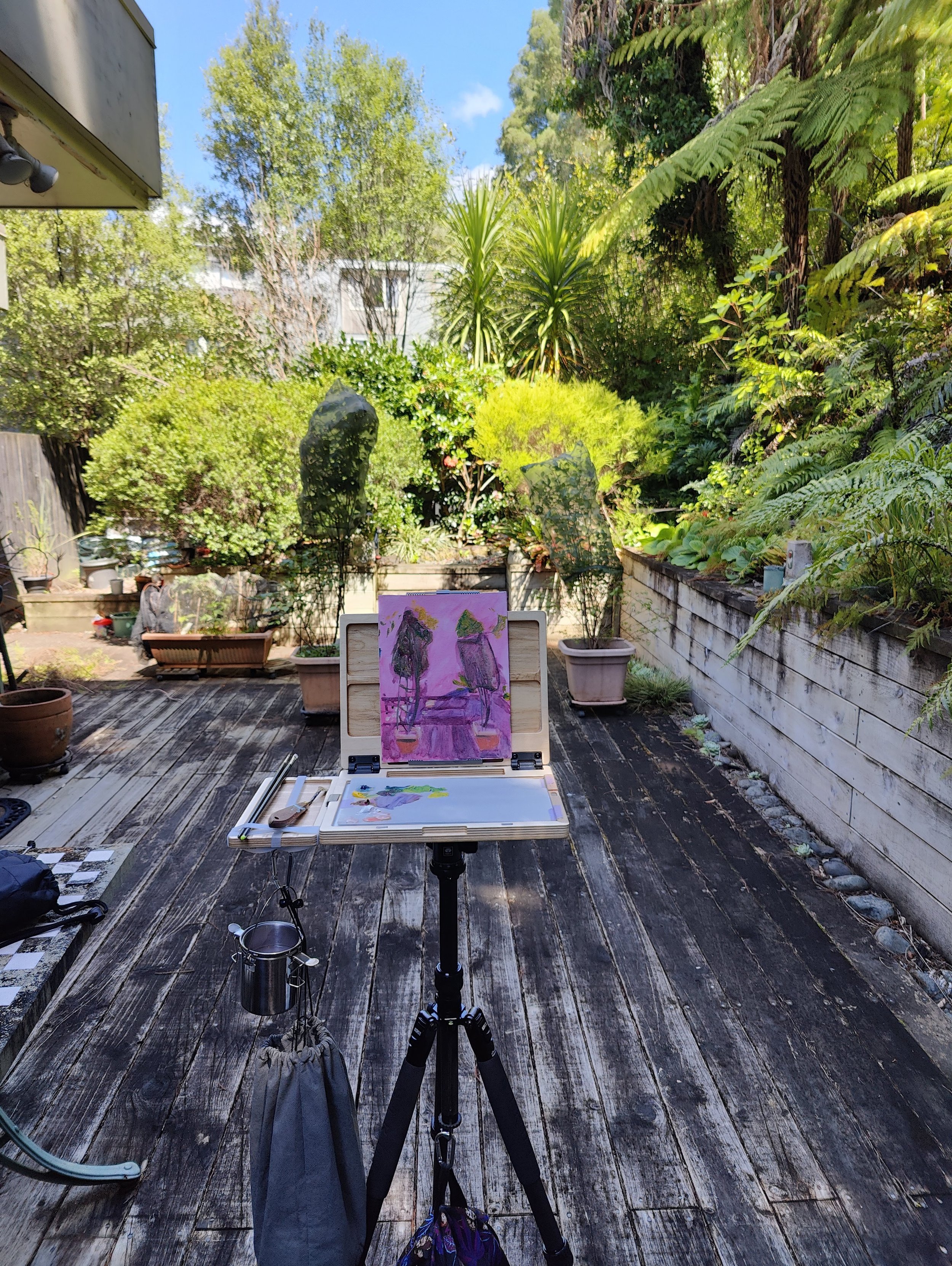
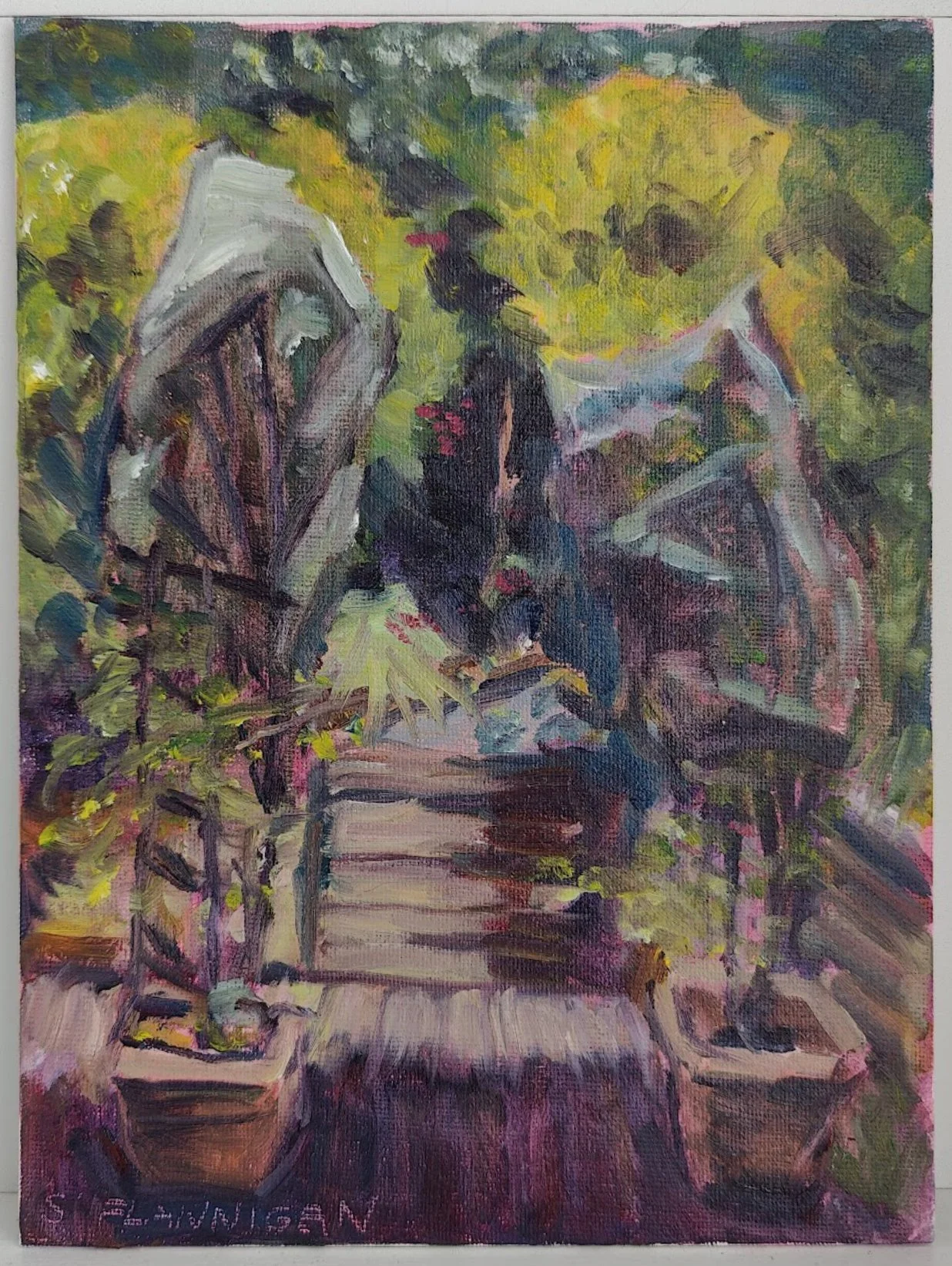
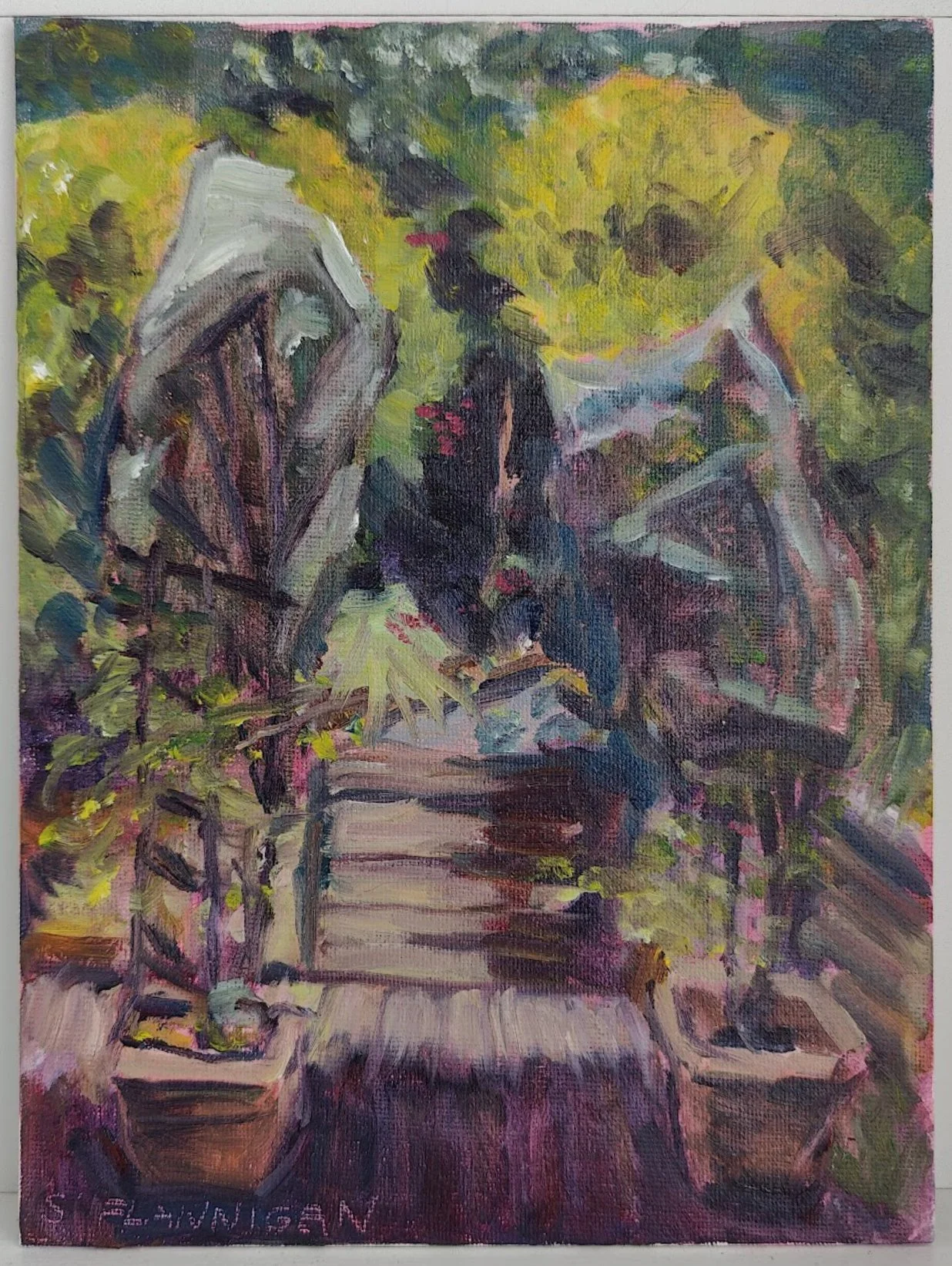
The final piece. Roughly 1h, 30 mins
It was a success in that I had fun and managed to paint something! There are a couple tweaks I want to make before heading out into the ‘real world’ with my kit.
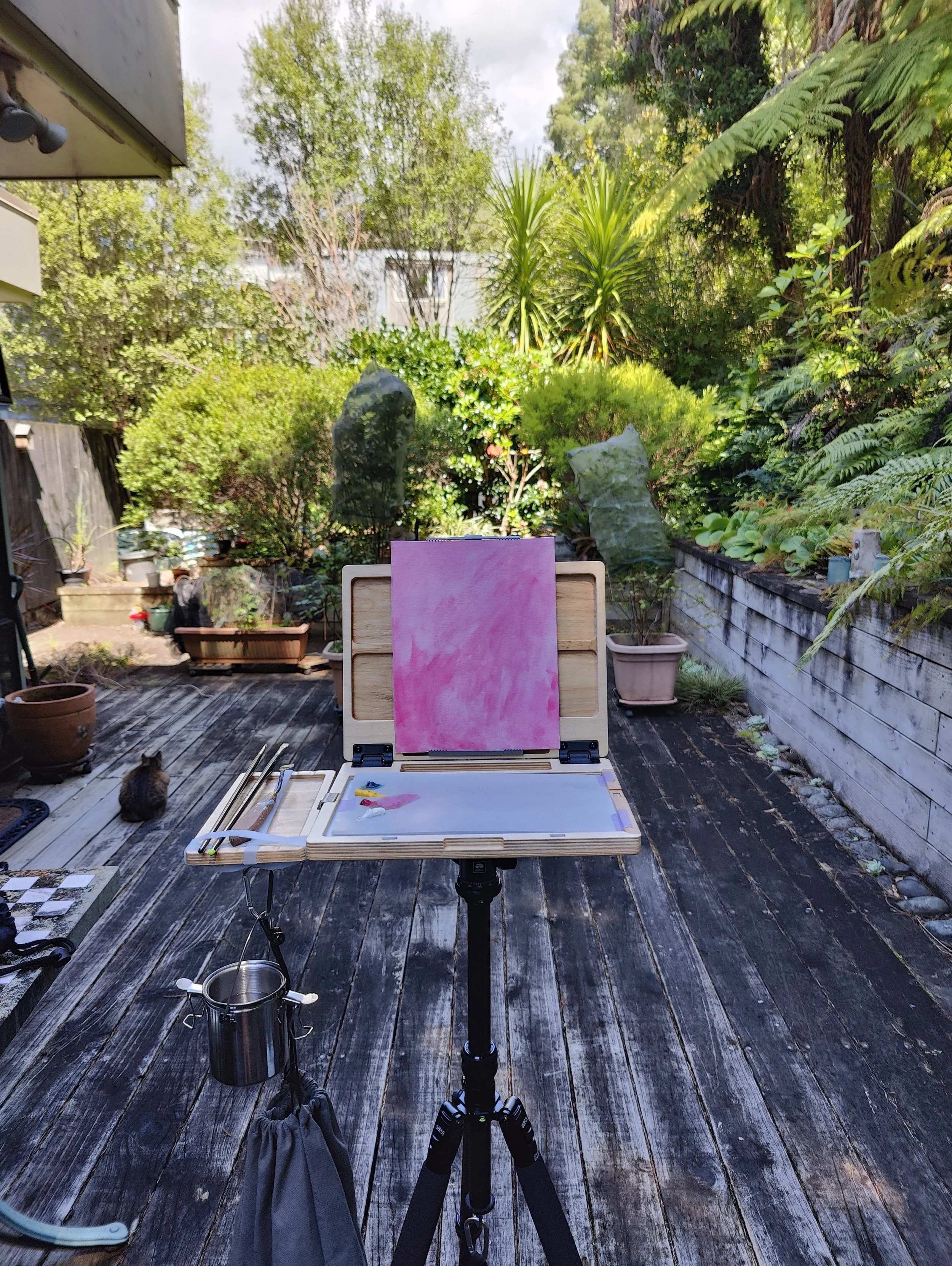
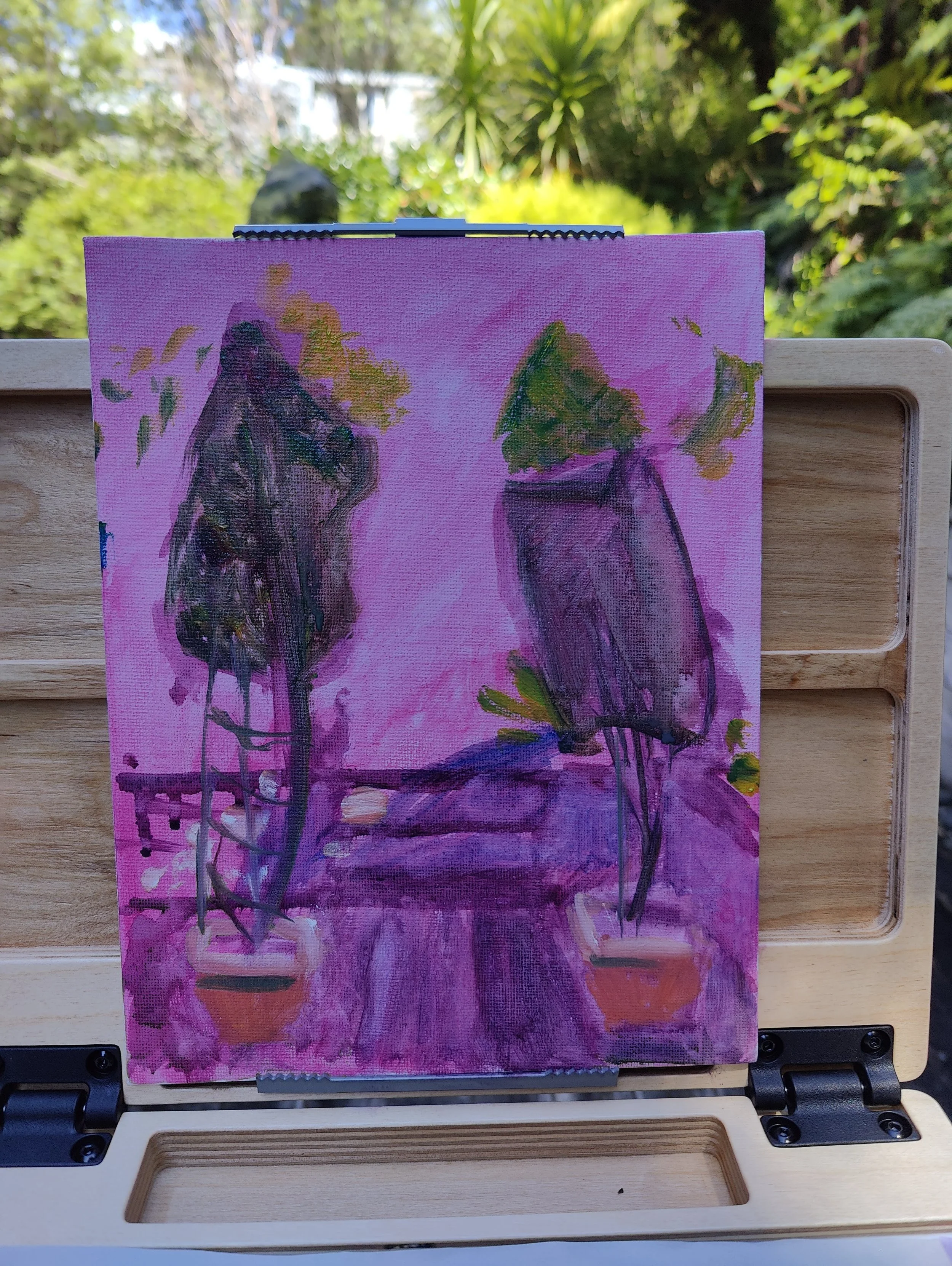
Lesson 1: I should have toned my canvas in advance.
Because I toned it on the spot, it meant the background colour slightly bled into all the paints I layered on top. If I was using regular oil paints with solvent it wouldn’t have been too bad because a thin layer of paint mixed with solvent dries pretty quickly, but I’m using water-mixable oils and it’s not quite the same.
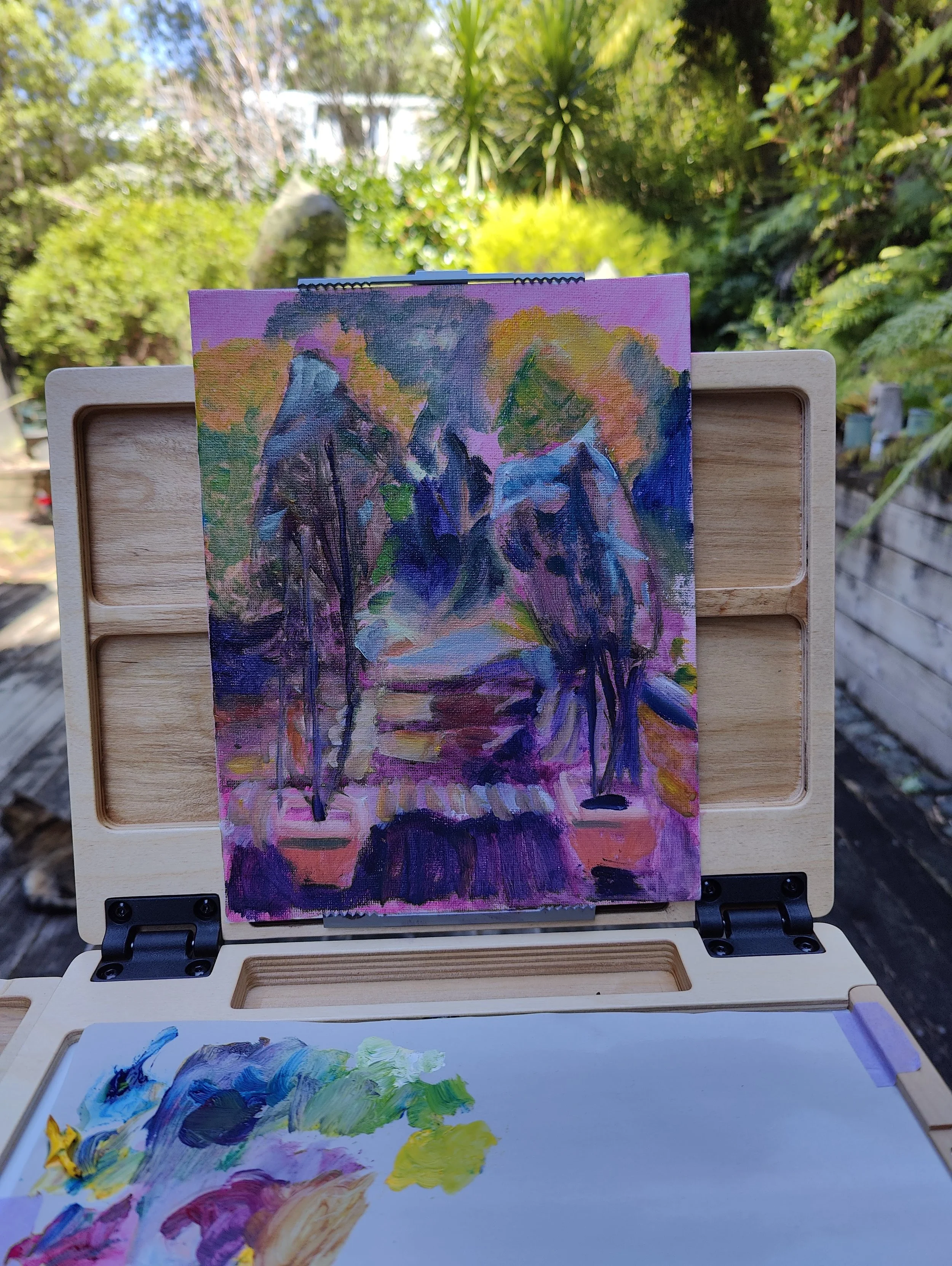
Lesson 2: I should have included more paints.
I was being a bit ambitious with my lack of colours, hoping to lighten my load and do more mixing on the palette. In some ways it kind of gave my painting a surreal look, so I’m not upset with the results, but if I want to try and capture real-world colours in rapidly changing light conditions, then I’ll need to give myself any advantage I can and have a wider range of colours on my palette to begin with.
Lesson 3: I should have included more brushes.
I only really used the one brush, a filbert. I went back and forth between colours on a whim, which meant that they kept getting muddier. At my usual home setup, I use plenty of fresh water for cleaning brushes and have multiple vessels of water so that I can do an initial rinse, a wipe, and then a second rinse in a second cleaner jug of water. Because I’m only bringing a small metal vessel of water, I don’t really have the luxury of deep-cleaning my brushes, so I should bring more brushes and at the very least, keep one brush for light and one for dark colours.
I also forgot to include a palette knife, so I had to run back inside and grab one.
Lesson 4: Light and shadows move fast.
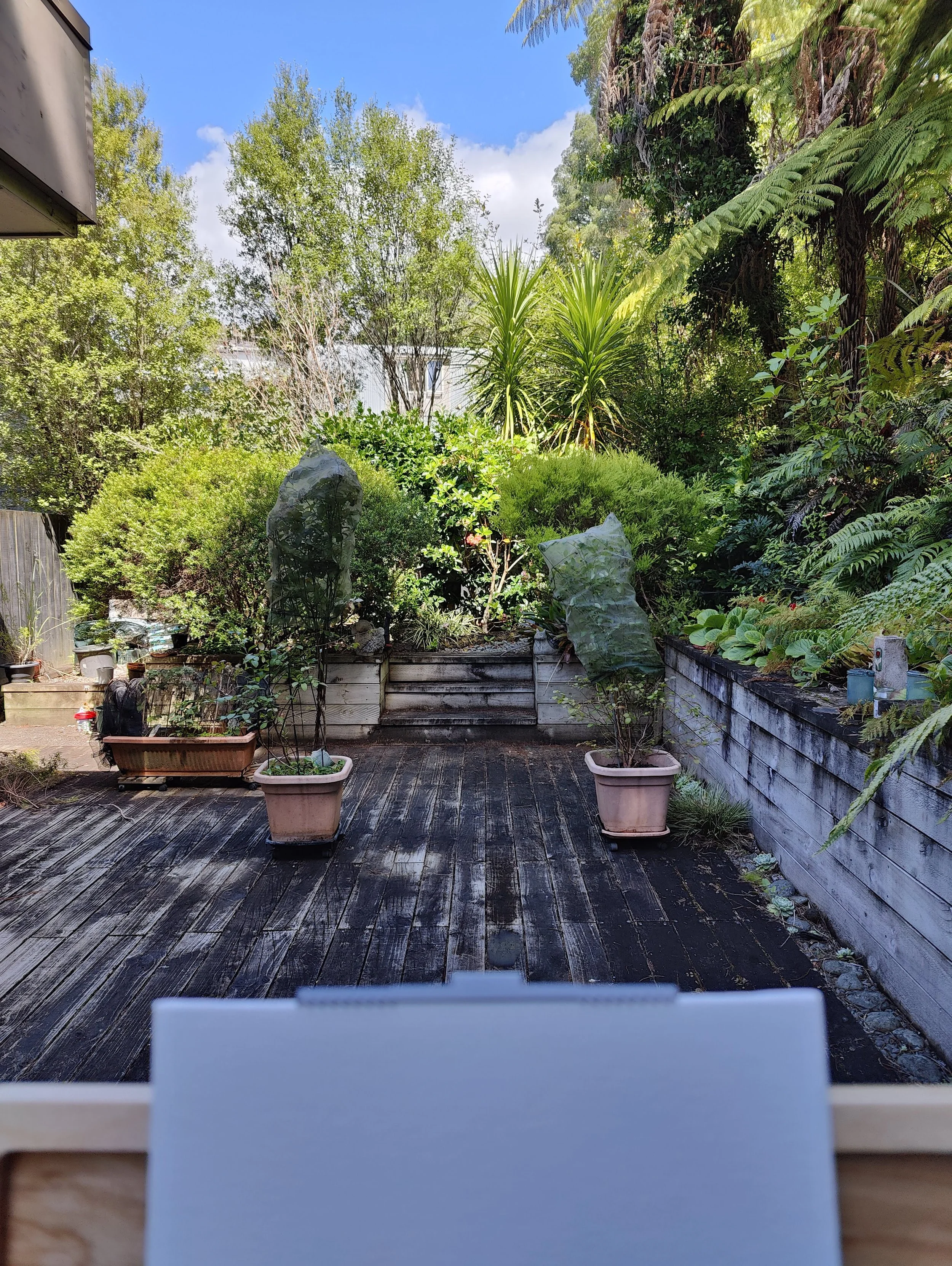
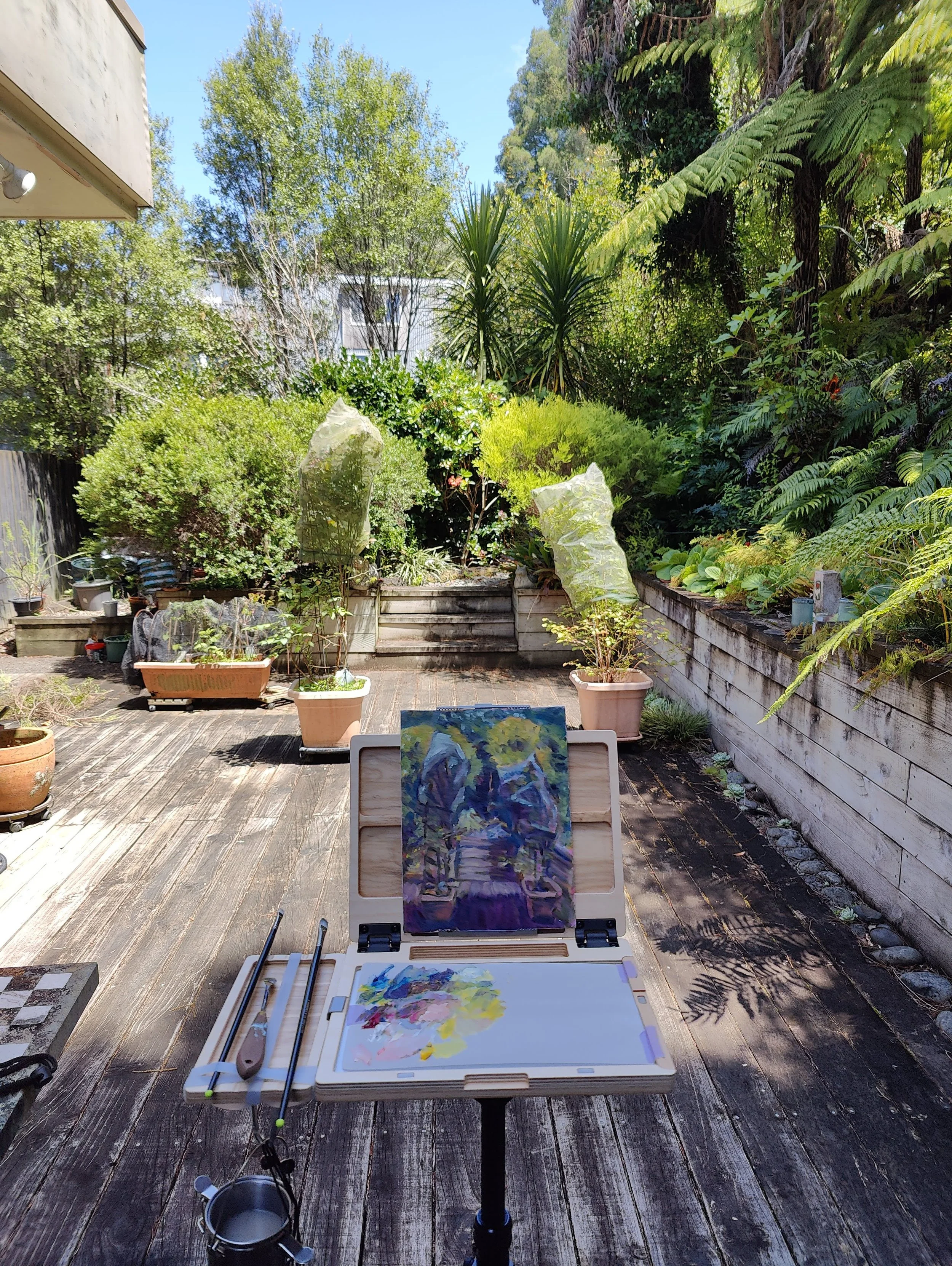
This was an eye-opening one - I thought I was painting quickly, but the light and shadows changed so quickly! I started around 11:30AM and at that time, the blueberry plants were entirely in shadow. At 12:08 the sun was hitting the tops of the bags over them, which is what my painting reflects. By 12:40 almost the entire deck was in the sun!
I’m still not sure how I’m going to deal with that! I suppose it’ll just take experience to get used to it. It’s a big change from painting off a photo, or even off a still life reference with indoors lighting.
Overall, I’m happy with the kit and keen to try it out again soon, maybe at the beach reserve near my house!
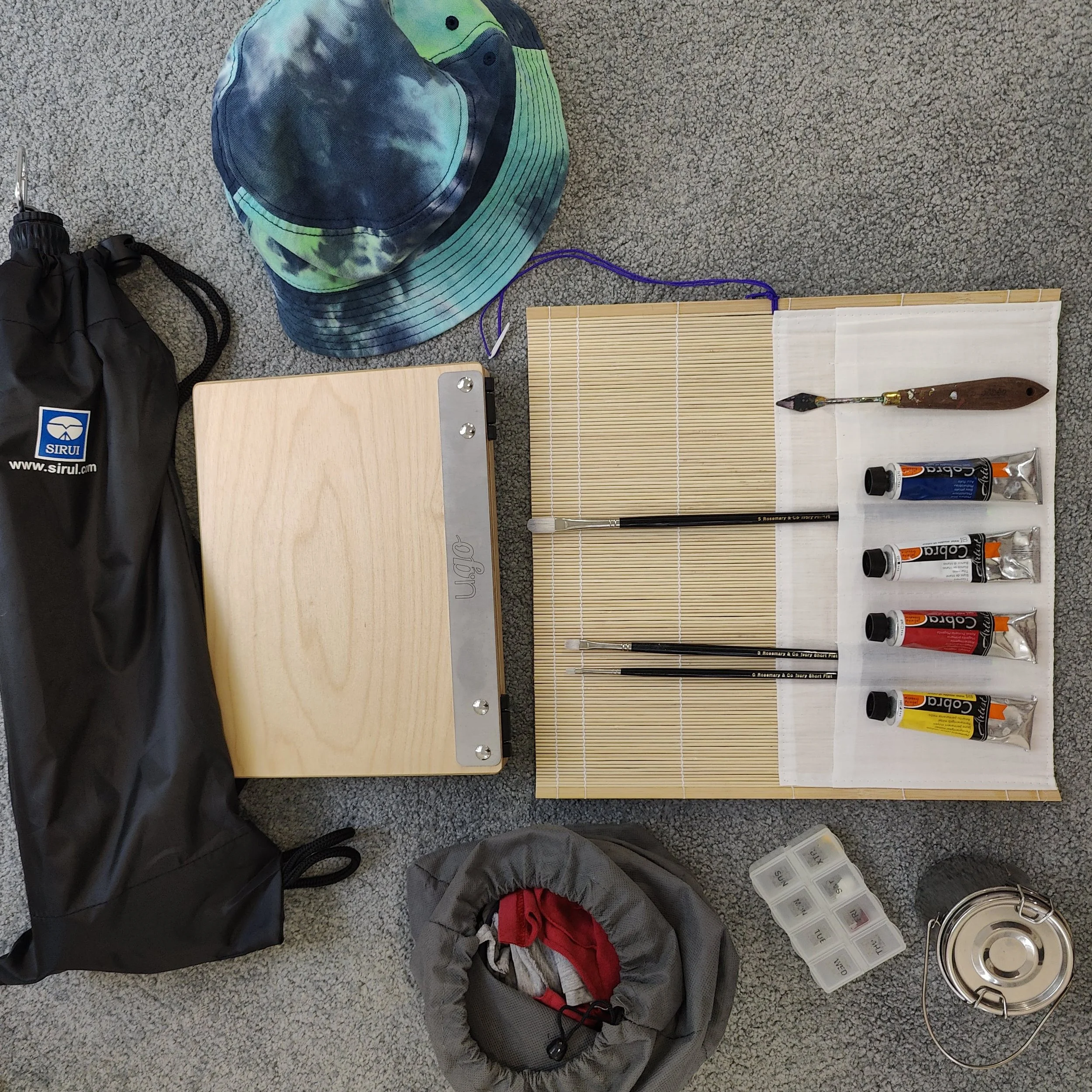
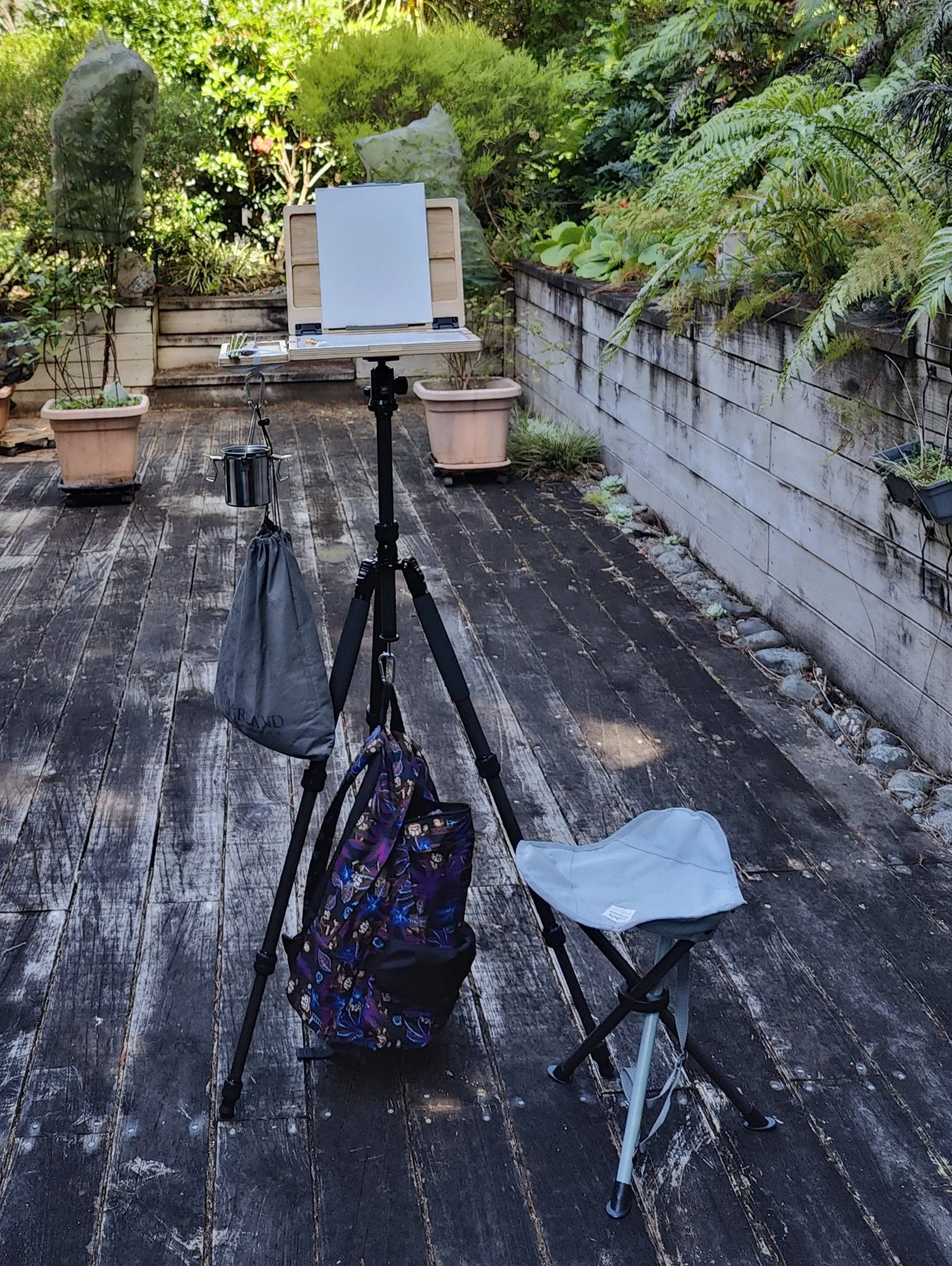
My kit:
Bamboo brush wrap (basically a sushi roller with some cloth to hold brushes!)
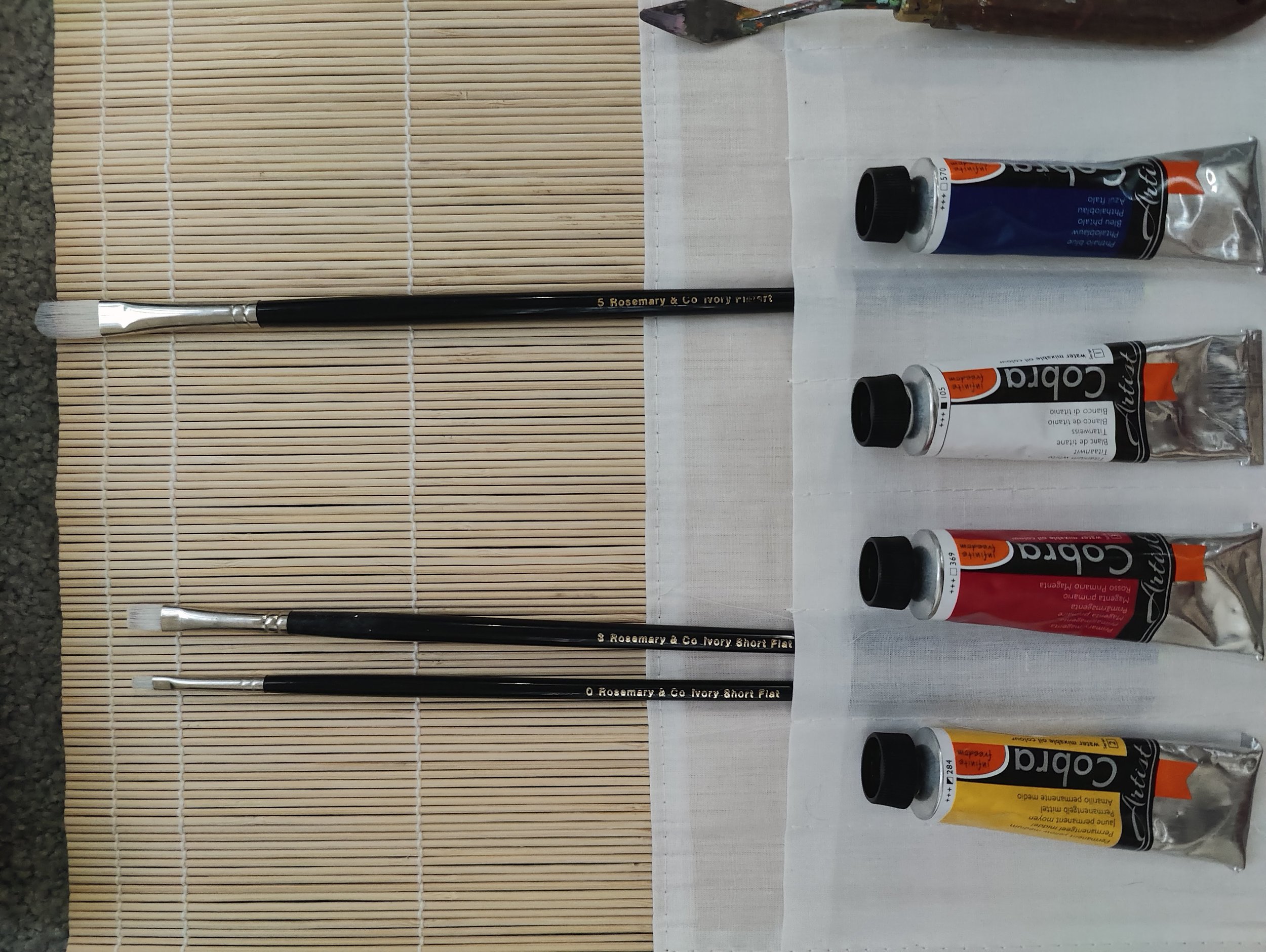
Rosemary & Co brushes
Ivory range brushes with long handles.
Filbert size 5, Short Flat sizes 0 and 3.
I would have liked a larger brush, although that was mainly missed while toning the canvas
Cobra water mixable oil paints
Yellow Medium, Primary Magenta, Phthalo Blue and Titanium White.
I didn’t use any mediums other than plain water.
Next time I’ll also bring a brown (burnt umber or transparent red oxide?), and a darker yellow (yellow ochre). Maybe an orange or primary red. Possibly Ultramarine Blue as an alternative to the overpowering Phthalo Blue.
I wanted to avoid bringing toxic pigments and chemicals where possible, which is why I’ve settled on water mixable oil paints. The Cobra ones are really quite good. Also I don’t have to worry about spilling solvent in my backpack so it’s a win-win solution!
My worst/best cheap Pebeo palette knife that I’ve accidentally bent, but it’s still my go-to.
U-Go Pochade Box
The middle-sized 8.4x11.25" one
Also one U-Go side-tray
I could probably have done with the size up, mostly due to the limited palette size, but it’s nice how light and small it folds up and it feels very stable.
Sirui Traveler 7C Carbon-fiber Tripod
I got this one because it seemed well-made and light enough, but could also handle a heavier load in case I ever got a heavier pochade box or something. I also hang my bag off it to weigh it down. The U-Go Pochade Box has a screw hole for attaching the tripod’s quick-release doohickey.
Pill weekly organiser box to hold leftover blobs of paint
I saw this and it seemed like a great idea, but I’m not sure if I’m painting regularly enough to get to use it before it just dries up anyway!
Metal jug for brush-washing water
This hangs from a carabiner around one of the rubber bands that the pochade box came with. It has a little grate mid-way into the jug to agitate the brushes. It’s quite small.
It’s pretty small. I might do with either a larger one, or a second one for cleaner water.
A bag of rags (old cut-up t-shirts) for wiping brushes
A bucket hat
A water bottle for drinking water
Sunblock
A foldable stool
I didn’t actually use this. But maybe if I was painting for hours, it might be nice to sit and have a break.
A canvas panel
This one was a pre-gessoed 7” x 9” canvas on cardboard.
I wish I’d toned it before bringing it.
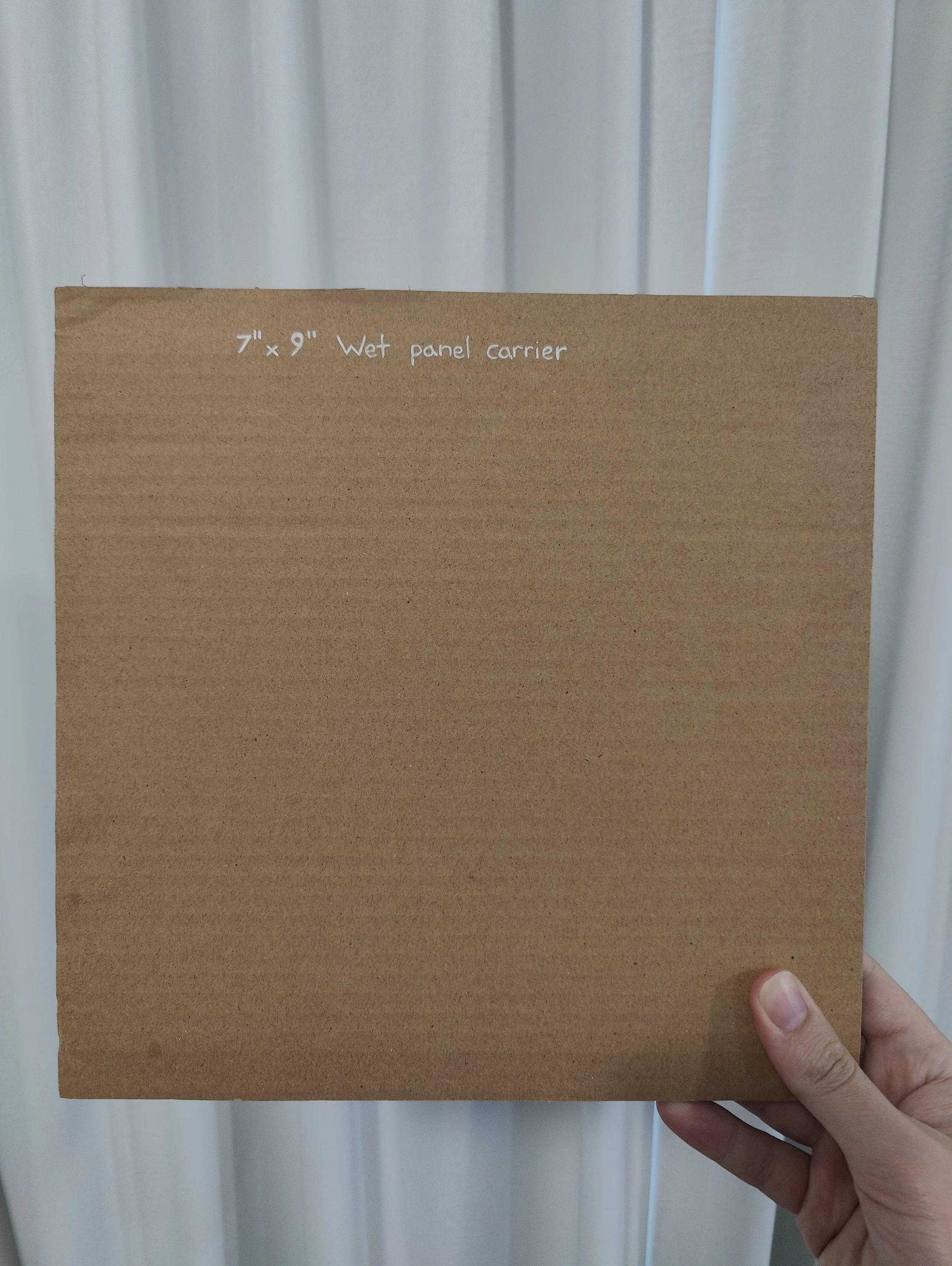
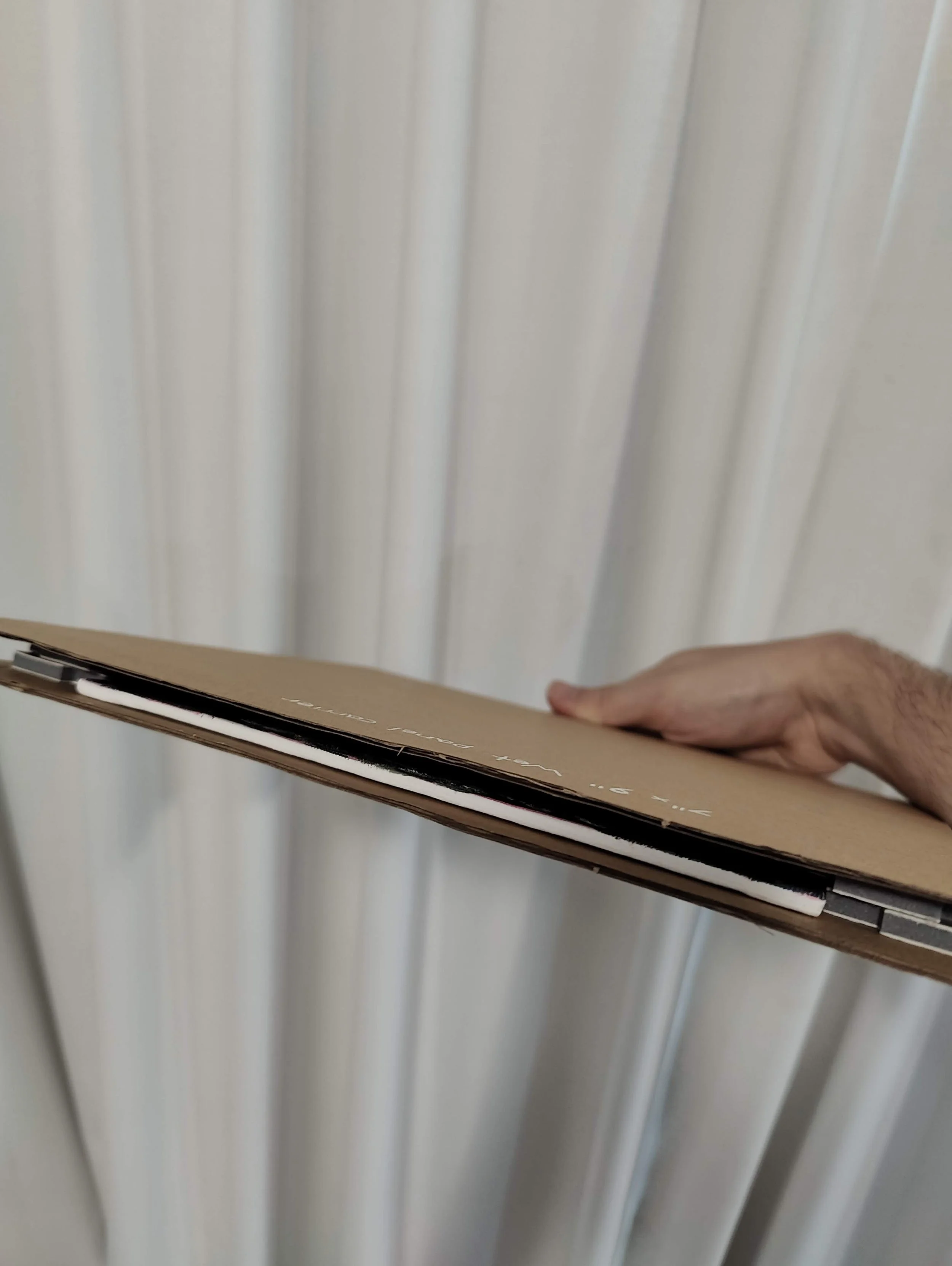
A wet panel carrier (handmade)
I wasn’t sure where to get a wet panel carrier that wasn’t absurdly expensive, so I made do with a home-made one. I glued some foam from some board game organisation inserts between some pieces of cardboard, and it sort of did the trick.
I’m not sure how well it’d hold up to a more rigorous journey, and it only holds one size of canvas, but I’ll do for now.
A backpack
I had a spare backpack, it’s quite small so I have to carry the tripod and foldable stool separately, but they have their own carry straps.